
Walk into almost any commercial gym and you'll hear the same advice: to build muscle, lift heavy. Keep the reps between six and twelve, add weight to the bar, and repeat.
It's not bad advice. But a growing body of research suggests it isn't the only way, and that how many hard sets you do (your training volume) may matter at least as much as how heavy the weights are. So is a higher-volume, lighter-load approach a better way to build muscle?
Let's look at what the evidence says…

Can light weights build muscle?
The short answer is yes, as long as you train close to failure. In this context, failure means the point where you can't complete another rep with good form.
In 2017, Brad Schoenfeld and colleagues pooled the results of studies comparing low-load training (60% of your one-rep max or less) with high-load training (above 60%). To be included, every study had to have its participants take their sets to momentary muscular failure and last at least six weeks. The conclusion: changes in muscle size were similar between the two approaches (Schoenfeld et al., 2017).
There was one important exception. Gains in one-rep max strength were significantly greater with heavier loads. So if your goal is to lift as much as possible in a single rep, you still need to lift heavy at least some of the time.
The lesson for muscle building is that the weight on the bar matters less than how hard each set is. What counts is that your muscles are properly challenged. A set of 25 reps stopped well short of failure won't do much, whereas a set of 25 taken to the brink can build muscle just as effectively as a set of 8 with a heavy load.
Does more volume build more muscle?
Volume is usually measured as the number of hard sets you do per muscle group each week. Again, Schoenfeld and colleagues examined the evidence, this time pooling 15 studies on weekly volume and muscle growth. They found a graded relationship: the more weekly sets, the greater the gains. In round numbers, muscle growth averaged 5.4% with fewer than five sets per muscle each week, 6.6% with five to nine sets, and 9.8% with ten or more (Schoenfeld, Ogborn & Krieger, 2017).
A few caveats are worth knowing:
Most participants were beginners. Only two of the studies involved experienced lifters.
The results only just missed the usual threshold for statistical significance, although the authors considered the trend strong.
The data came mainly from the upper arms and thighs. We can't be sure the same pattern applies everywhere.
There's no endless upside. The analysis couldn't identify an upper limit, but it's reasonable to expect that returns will eventually diminish, and that very high volumes will cause more fatigue than they're worth.
It's also worth noting that even the low-volume group built muscle. Fewer than five sets a week is far from useless, which is encouraging if you're short on time.

Are lighter weights safer?
This is a common claim, and it sounds logical. Lighter loads mean less force through your joints, tendons and spine on each rep, which could matter if you're returning from injury, working around achy knees or shoulders, or simply getting older.
There's some supporting evidence on the cardiovascular side. A small 2024 study of 16 young, trained men compared sessions taken to failure at 40%, 60% and 80% of one-rep max. The 80% sessions produced a bigger rise in sympathetic nervous system activity (the body's "fight or flight" response), which the authors suggested could mean more acute cardiovascular stress (Güngör et al., 2024). It's a single, small study and only looked at the first 40 minutes after training, so it's a hint rather than a verdict.
Importantly, we don't have good head-to-head evidence showing that light training causes fewer injuries over the long term. And there's a flip side: grinding out the last few reps of a high-rep set is tiring, and form tends to slip when you're fatigued. That's why failure training is best kept to safer exercises such as machines, cables and dumbbell work, rather than heavy barbell squats or deadlifts.
Is it more efficient?
On the clock, probably not. A set of 8 reps to failure with a heavy load is over in a flash, while a set of 25 to 30 can feel like it lasts forever, and both the burn and the breathlessness are far more unpleasant. Add the extra sets that a higher-volume approach calls for, and sessions can quickly stretch out.
Remember too that the heavier approach builds strength more effectively, which supports everything else you do in the gym.
Where lighter loads are efficient is in flexibility. They allow you to train effectively when you're at home with a pair of adjustable dumbbells, when you're nursing a sore joint, or when you've simply run out of plates. In those situations, knowing that light weights taken close to failure still work is a real advantage.
What about recovery?
More volume means more work, and more work means more to recover from. The cost of a bigger training load adds up, particularly if you do it all at once. If you jump from 6 sets per muscle per week to 20, don't be surprised if you feel flat, sore and sluggish for a while.
Whether light or heavy training is easier to recover from isn't clear-cut. Lighter loads may spare your joints and the cardiovascular system, as the 2024 study hints, but sets to failure at any load are demanding, and the burning, high-rep type of work can be draining in its own way.
Everyone responds a bit differently, so these guidelines are sensible:
Build volume gradually. Add a set or two per muscle each week rather than doubling overnight.
Don't take everything to failure. Save it for the last set of an exercise, and for movements where it's safe.
Spread your sets across the week rather than cramming them into one marathon session.
Plan lighter weeks. A planned drop in volume every so often lets fatigue dissipate.
Watch the warning signs. If your performance is slipping, your sleep is suffering or you're dreading every session, you probably need to do less, not more.
So, is it a better approach?
Not better, exactly, but a really useful addition. The research doesn't say lighter weights beat heavy ones. It says that muscle growth doesn't depend on lifting heavy, as long as the sets are hard enough, and that doing more quality sets is generally linked with more growth, at least up to a point.
For most people, the best programme uses both. Heavy work on your main lifts builds strength, while lighter, higher-rep sets (often on machines or with dumbbells) pile on extra volume with less strain on your joints. Start with around ten hard sets per muscle group each week, then adjust based on how you feel and how you're progressing.
About AdMac Fitness
AdMac Fitness has been helping the people of East London transform their health and fitness for nearly a decade.
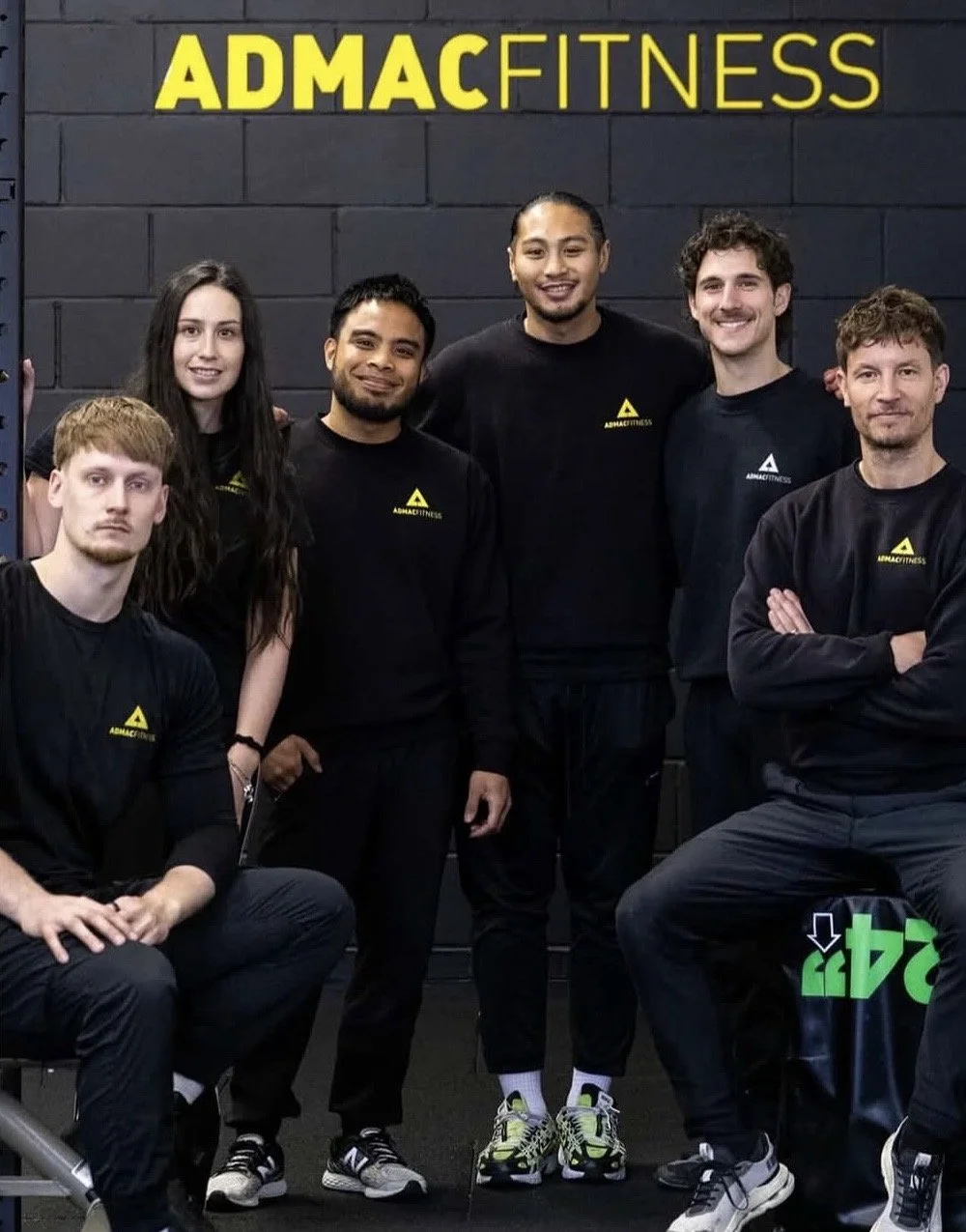
We help people using tried and tested fitness approaches. Our expert team of personal trainers, based in both Bow and South Woodford, can help you get a grip on your health forever. With our guidance and experience, you can relax knowing that your fitness journey is going to be guided by some of the best personal trainers in East London.
For more information on who we are, what we do and how we can help you achieve your health and fitness goals, contact us on 07921465108 or email us at admacfitness@gmail.com. We look forward to hearing from you!
Our locations are…
AdMac Fitness: Arch 457 Robeson St, London E3 4JA.
AdMac Fitness South Woodford: Unit 4 Marlborough Business Centre, 96 George Lane, South Woodford, London, E18 1AD.