
Zone 2 has become one of the most talked-about ideas in fitness over the last few years, and for good reason. It's the low-intensity, steady-state cardio that sits at the foundation of most serious endurance programmes — but it's just as valuable for general health, fat metabolism and long-term fitness, regardless of whether you're training for an event or simply want a heart that works better for longer.
Unlike a HIIT session or a hard gym class, Zone 2 doesn't leave you gasping for breath. Done properly, it should feel almost too easy — and that's exactly the point.

What Is Zone 2 Training?
Heart rate training zones split exercise intensity into five bands, calculated as a percentage of your maximum heart rate. Zone 2 sits at roughly 60–70% of your max heart rate, representing a pace you could hold for a long period without your effort creeping upwards.
Physiologically, Zone 2 is the intensity at which your body is best able to clear lactate at the same rate it's produced, meaning you stay in a stable, sustainable aerobic state rather than tipping into the harder-breathing, glycogen-burning zones above it. It's thought to recruit mainly slow-twitch (Type I) muscle fibres and rely predominantly on fat as a fuel source, rather than carbohydrate.
The concept is closely associated with Dr Iñigo San Millán, a former competitive cyclist and exercise physiologist who has worked with elite endurance athletes, and whose research on mitochondrial adaptation helped popularise the approach beyond professional sport and into general fitness and longevity circles.
How to Find Your Zone 2
There are a few ways to work out where your own Zone 2 sits. None of them are perfect, so it's worth combining a couple of methods rather than relying on a single number.
Percentage of max heart rate
The simplest approach is to estimate your maximum heart rate using 220 minus your age, then calculate 60–70% of that figure. For a 40-year-old, that's roughly 108–126 bpm. It's a useful starting point, but this formula is known to be inaccurate for some individuals, particularly older or well-trained athletes.
The Maffetone (MAF) method
Popularised by coach Phil Maffetone, this formula is simply 180 minus your age, giving you an upper heart rate ceiling for Zone 2. Adjustments are commonly applied: subtract 10 if you're returning from illness or injury, or add 5 if you've trained consistently for two or more years without issue.
The Karvonen (heart rate reserve) method
This is generally considered the most accurate of the simple formulas, as it factors in your resting heart rate as well as your max. The calculation is: Zone 2 = resting HR + (0.60 to 0.70 × (max HR − resting HR)). Because it accounts for your individual fitness level rather than age alone, it tends to give a more personalised range.
The talk test
Perhaps the most practical day-to-day method. If you can hold a full conversation without gasping for breath, but couldn't comfortably sing, you're roughly in Zone 2. If you can chat effortlessly, you're probably below it; if you're speaking in short bursts, you've likely drifted into Zone 3.
Lactate testing
The most precise method, typically used by athletes and coaches, involves a small blood sample to identify the point at which lactate begins to accumulate faster than it can be cleared — usually around 2 mmol/L. This isn't practical for most people, but it's worth knowing it exists as the scientific benchmark the other methods are estimating.
Best Ways to Train in Zone 2
Zone 2 isn't tied to a single activity — it's an intensity, not an exercise. Some of the most effective and accessible options include:
Brisk walking or incline walking — one of the most underrated ways to sit comfortably in Zone 2, particularly for beginners or those returning from injury.
Steady-state cycling — easy to control precisely via power or heart rate, and low-impact on the joints.
Easy-paced running or jogging — effective, though it can be harder for less experienced runners to keep their heart rate low enough without slowing to a walk.
Swimming — low-impact and full-body, though harder to monitor heart rate accurately without specific equipment.
Rowing — a strong option for building aerobic capacity while also engaging the upper body.
Rucking (weighted walking) — walking with a loaded backpack, which raises heart rate without needing a faster pace.
The best option is simply the one you can sustain consistently and comfortably monitor — there's no meaningful advantage to one modality over another physiologically, provided the intensity stays in range.
Suggested Volume and Frequency
Most of the current guidance converges on a similar range. A commonly cited minimum effective dose is around 3 hours per week, typically spread across 3–4 sessions of 45–60 minutes each. Some coaches suggest that sessions need to run for at least 30–45 minutes to fully mobilise fat stores and provide a meaningful training stimulus, as it takes the body some time to shift into predominantly fat-based fuelling.
For general health and a solid aerobic base, 3–4 sessions a week is a sensible target for most people. Athletes building a genuine endurance base may work up towards 3–5 hours weekly or more, though this is a substantially higher volume than most recreational exercisers need.
Monitoring and Controlling Intensity
The biggest challenge with Zone 2 isn't physical — it's discipline. Most people naturally drift too hard, turning an easy aerobic session into a moderate one that no longer delivers the same benefit.
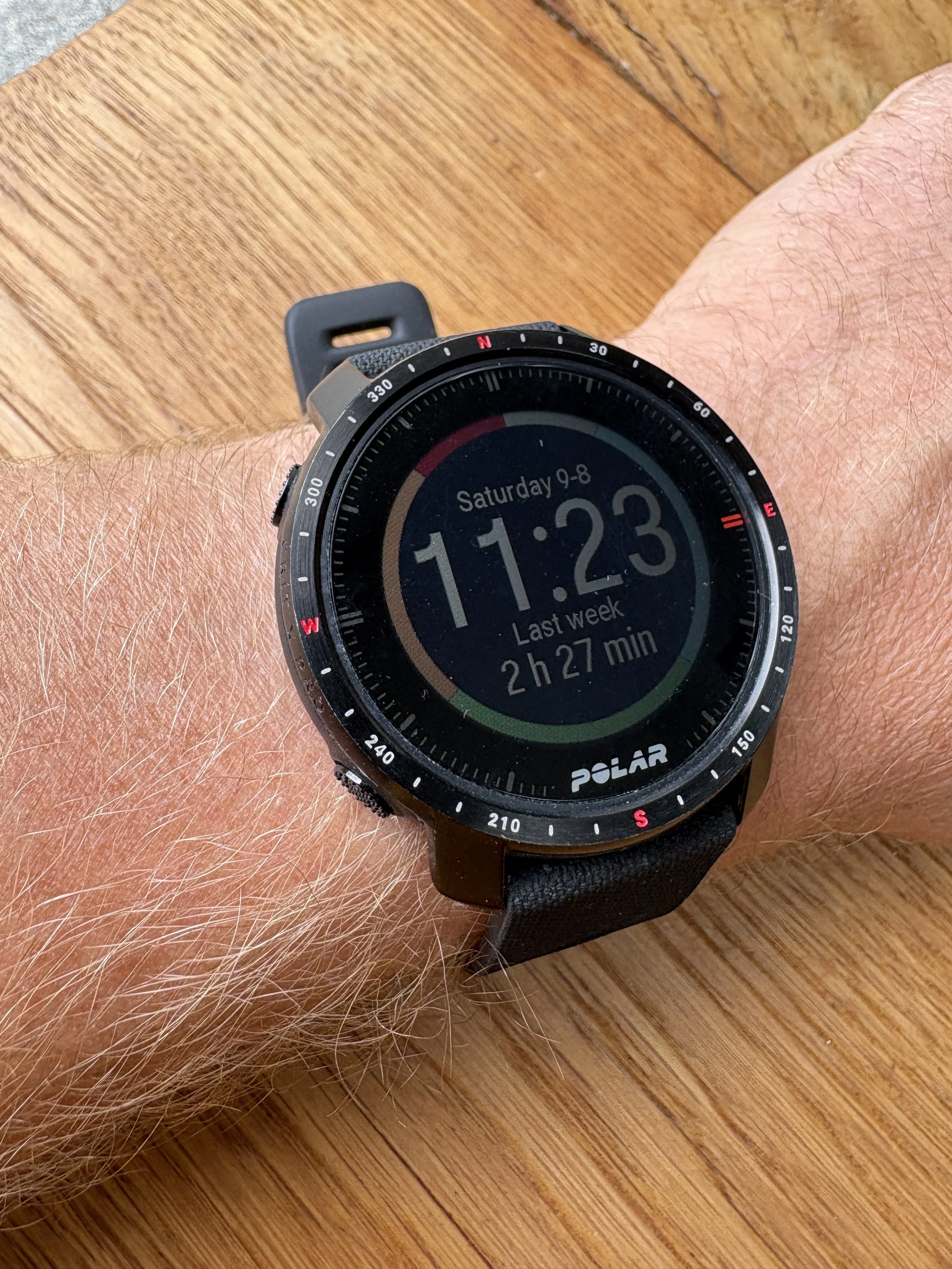
Use a heart rate monitor. A chest strap tends to be more accurate than a wrist-based optical sensor, particularly at lower intensities.
Check in regularly, not constantly. Glancing at your heart rate every few minutes is more useful than obsessively watching a screen, which can itself raise your heart rate.
Slow down more than feels natural. Almost everyone needs to walk, rather than jog, for their first few Zone 2 sessions — this is completely normal and not a sign of poor fitness.
Account for external factors. Heat, poor sleep, stress, caffeine and dehydration can all push your heart rate up at a given pace, so don't be surprised if your usual Zone 2 effort suddenly requires you to slow down further.
Reassess periodically. As your aerobic fitness improves, you'll naturally be able to move faster at the same heart rate — a useful marker of progress in itself.
A Balanced View
It's worth saying plainly: Zone 2 has become something of a buzzword, and not every claim made about it holds up equally well under scrutiny. A 2025 narrative review published in Sports Medicine concluded that current evidence doesn't clearly support Zone 2 as the optimal intensity for improving mitochondrial or fat-oxidative capacity, and suggested that higher-intensity work may offer more benefit per minute for those with limited training time.
Other researchers have made similar points — much of the popular enthusiasm for Zone 2 stems from observing elite endurance athletes who train 15–20+ hours a week, a context that doesn't necessarily translate to someone training 3–4 hours weekly.
None of this means Zone 2 isn't worthwhile. It builds a genuine aerobic base, it's easy to recover from, it's sustainable long-term, and it complements harder training well rather than competing with it for recovery resources. The sensible approach is to see it as one useful tool in a broader programme — not a replacement for strength training or higher-intensity cardio, but a valuable addition alongside them.
The AdMac Approach
At AdMac, we build Zone 2 into client programmes as a low-stress way to develop aerobic fitness and support recovery between harder sessions — not as a magic bullet, but as one solid, well-evidenced piece of a bigger picture. Whether that's a brisk incline walk, an easy bike ride, or a steady row, consistency matters far more than perfection.
Get the intensity roughly right, do it regularly, and the aerobic base you build will support everything else you're working towards.
Want to improve your health and fitness? Let the AdMac Fitness Personal Trainers help…
AdMac Fitness has been helping the people of East London transform their health and fitness for nearly a decade.

We help people using tried and tested fitness approaches. Our expert team of personal trainers, based in both Bow and South Woodford, can help you get a grip of your health forever. With our guidance and experience, you can relax knowing that your fitness journey is going to be guided by some of the best personal trainers in East London.
For more information on who we are, what we do and how we can help you achieve your health and fitness goals, contact us on… 07921465108 or email us at admacfitness@gmail.com. We look forward to hearing from you!
Our locations are…
AdMac Fitness: Arch 457 Robeson St, London E3 4JA
AdMac Fitness South Woodford: Unit 4 Marlborough Business Centre, 96 George Lane, South Woodford, London, E18 1AD