
Ask ten people (crikey, even personal trainers) for the best form of cardio, and you'll probably get ten confident answers. One swears by 20-minute HIIT sessions. Another logs an hour on the cross-trainer. A third thinks a long walk with the dog beats both.
They're all partly right, which is the problem. "Best" depends entirely on what you want cardio to do for you, and on how much time, energy and recovery capacity you have to give it.
In this article, we compare three broad approaches (high-intensity interval training, steady-state cardio, and long, slow movement like walking) across the outcomes people care about most: heart health, cardiovascular fitness, calorie burn, and fat loss, plus the practical factors that determine whether you'll actually keep doing it.
The three contenders
High-intensity interval training (HIIT) alternates short, hard efforts with recovery periods. Think 10 to 60 seconds close to flat out, followed by an easier minute or two, repeated for 15 to 45 minutes in total.
Steady-state cardio (often called moderate-intensity continuous training, or MICT) is sustained effort at a comfortable-but-working pace for 30 to 60 minutes: a steady jog, a brisk cycle, the rower at a pace where you can talk in short sentences.
Long, slow cardio covers low-intensity work done for a long time: walking, easy cycling, hiking. You'd barely call it a "workout", but the accumulated volume adds up.
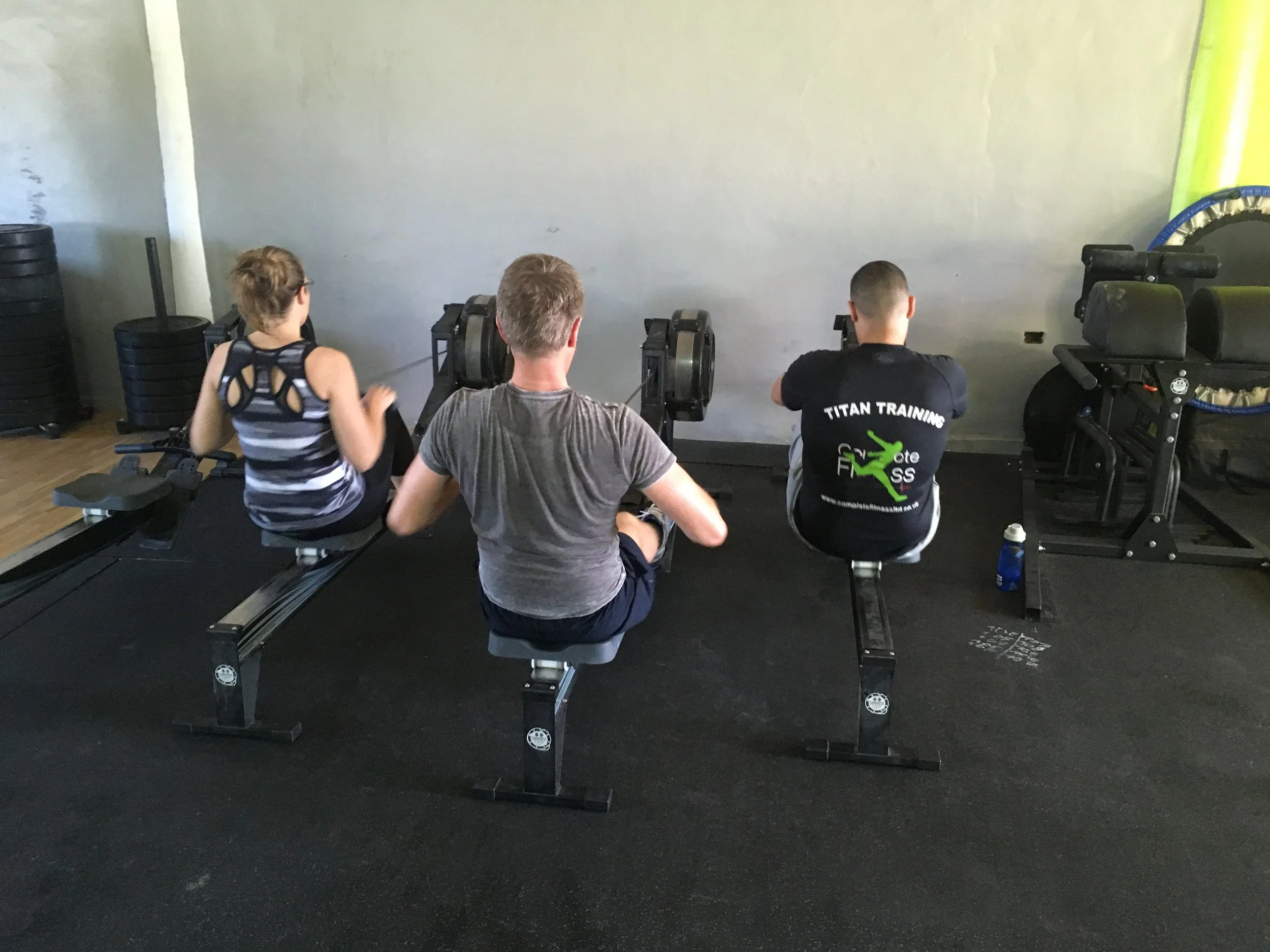
HIIT: the time-efficient option
The pros
Time-efficient. Short sessions can deliver a big training stimulus, which is a real advantage if you're busy.
Strong for cardiovascular output. Hard intervals push your heart and muscles harder than steady effort can, which is the key driver of improvements in VO2max (the maximum amount of oxygen your body can use, and a core marker of cardiovascular fitness). A meta-analysis in the British Journal of Sports Medicine found HIIT improved VO2max by roughly double the amount of moderate continuous training in people with lifestyle-related cardiometabolic conditions. In healthy people the gap tends to be smaller, but the direction of travel is similar.
High calorie burn per minute. You burn more energy in each minute of work than at lower intensities.
The cons
It's demanding. Hard efforts take more out of your muscles, joints and nervous system, so you need proper recovery between sessions. Most people do well with one or two a week, not five.
Higher injury and overuse risk, especially if you're returning to exercise, carrying an injury or stacking it on top of heavy leg training.
Not for everyone at the start. If you're new to exercise, or have a heart or blood pressure condition, build a base first and speak to your GP before launching into maximal efforts.
It's easy to do badly. Half-hearted "intervals" at a medium-hard pace give you a bit of both worlds and the full benefit of neither.
Steady-state cardio: the dependable middle ground
The pros
Accessible and scalable. You can adjust the pace, the duration and the equipment to almost any fitness level.
Lower stress than HIIT. It's easier to recover from, so you can do more of it, more often.
Effective for heart health and fitness. It improves cardiovascular fitness, lowers resting heart rate and supports healthy blood pressure.
Good for building an aerobic base that makes everything else (including your recovery between hard sets in the gym) easier.
The cons
It takes longer. The same fitness gains often cost more minutes than interval work.
Boredom. Forty-five minutes on a bike is not everyone's idea of fun.
It can plateau. If you always do the same pace for the same time, your body adapts and the stimulus fades unless you progress the duration or the effort.

Long and slow: the underrated one
The pros
Very low injury risk and minimal recovery cost. You can walk daily without it interfering with your strength training, which is a big deal if you lift hard.
Sustainable. It's the form of cardio people are most likely to stick with for years.
Proven health benefits. A meta-analysis of 15 international cohorts in The Lancet Public Health found that more daily steps were linked with a lower risk of death from any cause, with the benefit levelling off at around 6,000 to 8,000 steps a day for adults aged 60 and over, and around 8,000 to 10,000 for younger adults. Note that this is observational evidence, so it shows an association rather than proving cause, but the pattern is consistent.
Easy on the mind. Low-intensity movement can reduce stress without adding to it.
It's a good fit with how elite endurance athletes train. Research on well-trained endurance athletes in Frontiers in Physiology describes a pattern where roughly 80% of sessions are done at low intensity and about 20% at high intensity. Even the people who most need to be fit spend most of their time going easy.
The cons
Less time-efficient for building peak cardiovascular fitness. If your VO2max is the target, walking alone is unlikely to push it far once you're reasonably fit.
Lower calorie burn per minute, so it takes more time to match the energy cost of a harder session.
For a fit person, it's maintenance, not progress. It's brilliant for health and recovery, but it won't challenge a well-trained heart in the same way.
What about fat loss and calorie burn?
This is where people often expect HIIT to win outright, and the evidence doesn't back that up. A systematic review and meta-analysis in Obesity Reviews pooled 13 trials in overweight and obese adults and found both HIIT and moderate continuous training produced similar improvements in body composition, with no significant difference between them. The notable difference was time: HIIT needed roughly 40% less time commitment to get there.
So HIIT isn't a fat-loss shortcut, but it is a time-saver. If you've got 20 minutes, it gets you the same result in about half the time. If you've got an hour and you enjoy it, steady-state works just as well.
It's also worth remembering that cardio is a relatively small piece of the fat-loss puzzle. Overall energy balance (what you eat compared with what you burn across the whole day) matters far more than which cardio style you pick. Walking contributes more than people expect here too, because the calories from a daily 10,000 steps accumulate without wrecking your recovery.
So, is there a best form of cardio?
Not in general, but there's very much a best form of cardio for you, right now. Here's how to choose.
If your goal is to improve your cardiovascular fitness quickly and you're short on time: do HIIT once or twice a week, on top of a base of easier work.
If your goal is long-term heart health and longevity: build a foundation of daily walking and regular moderate cardio. The UK Chief Medical Officers' guidelines suggest 150 minutes of moderate activity a week, or 75 minutes of vigorous activity, or a mix of the two, and walking plus a couple of steady sessions covers that comfortably.
If your goal is fat loss: pick the style you'll actually do consistently and keep your nutrition in order. Use HIIT if you're short of time, steady-state if you prefer it, and walking to boost your daily energy expenditure without piling on fatigue.
If you're new to exercise, returning from a break or an injury, or you're older: start with walking and steady, comfortable cardio, then introduce short intervals gradually as your fitness and confidence grow. Get medical advice first if you have a heart or blood pressure condition.
If you lift heavy and recovery is limited: keep most of your cardio easy, such as walking, easy cycling or zone-2 style work, and use hard intervals sparingly so they don't eat into your strength sessions.
If you're training for an endurance event: follow the elite pattern. Do most of your training easy, with a smaller portion of properly hard work.
If your goal is simply to feel better and be healthier: walk more, add some steady cardio you enjoy, and throw in the occasional hard session. That mix covers nearly everything.
The best cardio is the one you can repeat
The research points the same way again and again. Each style has a clear strength, but none is the winner across the board, and the biggest predictor of results is consistency. A "perfect" programme you abandon after three weeks loses to an imperfect one you keep up for three years.
The smartest approach for most people is a blend: plenty of easy movement as the base, a couple of steady sessions to build your engine, and a hard interval workout once or twice a week if you want to sharpen it.
About AdMac Fitness
AdMac Fitness has been helping the people of East London transform their health and fitness for nearly a decade.

We help people using tried and tested fitness approaches. Our expert team of personal trainers, based in both Bow and South Woodford, can help you get a grip on your health forever. With our guidance and experience, you can relax knowing that your fitness journey is going to be guided by some of the best personal trainers in East London.
For more information on who we are, what we do and how we can help you achieve your health and fitness goals, contact us on 07921465108 or email us at admacfitness@gmail.com. We look forward to hearing from you!
Our locations are…
AdMac Fitness: Arch 457 Robeson St, London E3 4JA.
AdMac Fitness South Woodford: Unit 4 Marlborough Business Centre, 96 George Lane, South Woodford, London, E18 1AD.