
If there's one region of the body that quietly underpins almost everything you do - lifting, running, jumping, even standing up straight - it's the posterior chain. This is the group of muscles running along the back of the body: the glutes, hamstrings, erector spinae, and the deeper stabilisers of the hips and lower back.
Train it well, and you get a body that's both more resilient to injury and considerably more powerful. Neglect it, and you're left with exactly the pattern so many gym-goers fall into - strong through the front of the body, weak and underdeveloped through the back.
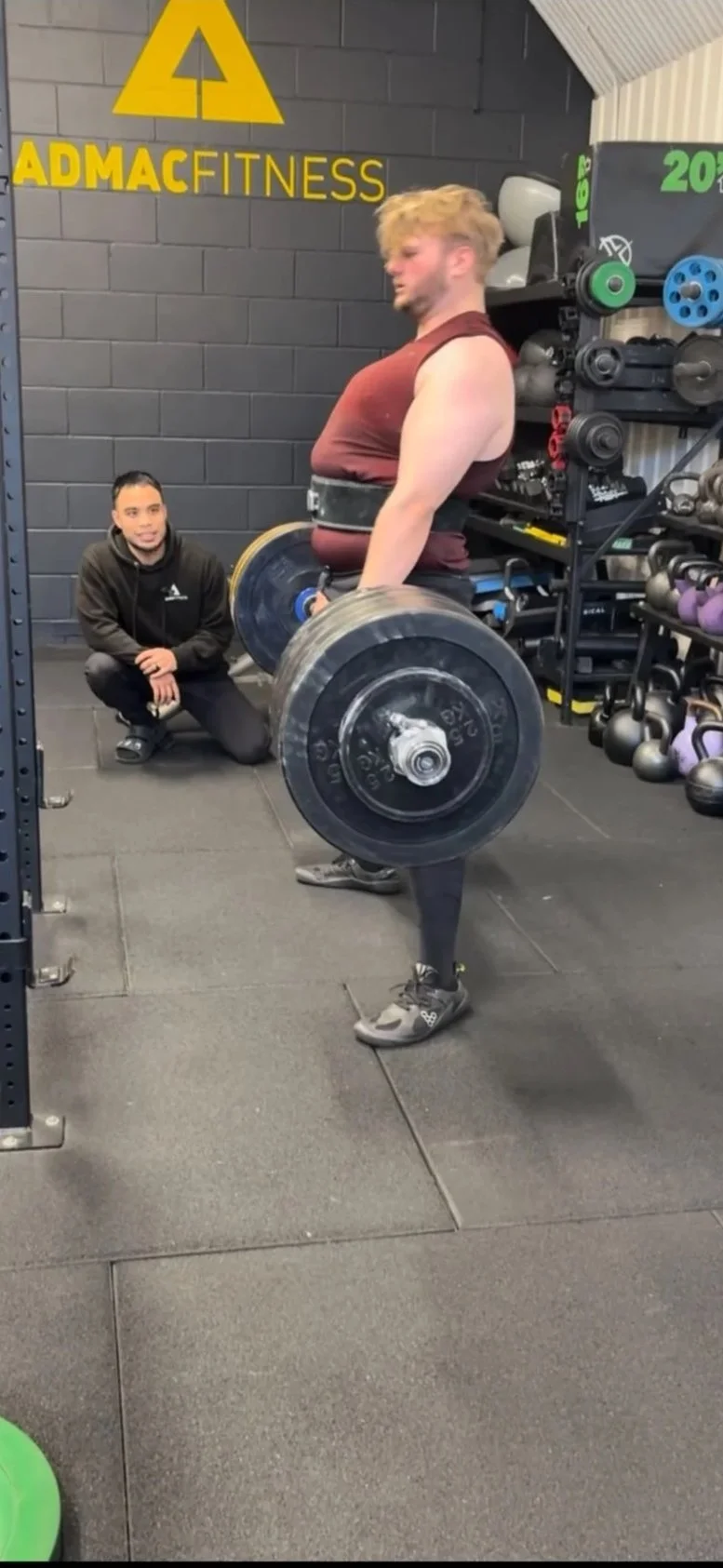
This article looks at five of the most effective posterior chain exercises - deadlifts, power cleans, kettlebell swings, Nordic hamstring curls, and back extensions - and what the evidence says about why each one earns its place in a well-built training programme.
Why the Posterior Chain Deserves Priority
The posterior chain is responsible for hip extension - the driving force behind sprinting, jumping, and standing up from a squat - as well as spinal stability under load. When it's underdeveloped relative to the front of the body, the knees, lower back, and hamstrings tend to pick up the slack, which is where a lot of common training injuries originate. Research into chronic low back pain has found that structured posterior chain resistance training produces significantly greater improvements in pain, disability and muscle strength than general exercise programmes, reinforcing just how much protective value this area carries when it's trained properly.
Deadlifts
The deadlift is the cornerstone posterior chain exercise, and for good reason. It loads the glutes, hamstrings and erector spinae simultaneously through a hip-hinge pattern that mirrors everyday movements like picking something up off the floor.
There's a persistent myth that deadlifting is inherently risky for the lower back, but the evidence points the other way: a study on adults with acute low back pain found that a heavy isometric deadlift did not impair force output or muscle activation compared with pain-free individuals, and structured deadlift-based training programmes have consistently been shown to improve, rather than worsen, chronic low back pain outcomes.
Done with good technique, the deadlift builds exactly the kind of full-body posterior strength that protects the spine under real-world loads, rather than being something to work around.
Power Cleans
The power clean is less about slow, grinding strength and more about developing rate of force development - how quickly you can produce power - which is central to athletic performance.
A systematic review and meta-analysis of Olympic weightlifting-based training found positive effects on countermovement jump performance, sprint times, and maximal squat strength, particularly when combined with traditional resistance training. Other controlled trials in athletic populations have found that six weeks of hang clean training produced significant improvements in vertical jump height, back squat strength, and sprint speed.
For anyone whose goals include speed, jumping ability, or general athleticism, the power clean is one of the most direct ways to translate posterior chain strength into usable power.
Kettlebell Swings
The kettlebell swing is a hip-hinge movement in its own right, but with an emphasis on explosive hip extension rather than a heavy grind.
Biomechanical research on the swing has confirmed that it's a genuinely posterior chain-dominant movement requiring substantial hip extension force, regardless of whether it's performed to shoulder height or overhead, making it an effective and accessible option for developing hip power without the technical demands of Olympic lifting.
Because it also carries a significant conditioning component, the swing is a useful bridge between strength work and cardiovascular training - and it reinforces the same hip-hinge mechanics that make the deadlift and power clean effective and safe.
Nordic Hamstring Curls
If there's a single exercise with the strongest injury-prevention evidence behind it, it's the Nordic hamstring curl. Hamstring strains are among the most common injuries in sport, and the biceps femoris - the muscle most frequently involved - responds particularly well to this exercise.
A systematic review and meta-analysis found that injury prevention programmes incorporating the Nordic hamstring exercise reduced hamstring injury rates by up to 51% in the long term compared with teams that didn't include it.
The mechanism appears to be down to the unique eccentric loading pattern: research shows that higher-volume Nordic curl training produces meaningful increases in eccentric hamstring strength, fascicle length and muscle thickness - adaptations that are specifically protective against strain injuries during high-speed movements like sprinting.
Back Extensions
Where the previous four exercises train the glutes and hamstrings through hip extension, back extensions specifically target the lumbar erector spinae - the muscles that keep the lower back stable and upright under load. This matters because deconditioning of the lumbar extensors has been identified as a general risk factor for back pain and injury.
A systematic review and meta-analysis found that isolated lumbar extension training produced significant reductions in pain and disability alongside improved lumbar extensor strength in adults with chronic low back pain, and separate research has shown measurable increases in muscle cross-sectional area and strength after just 12 weeks of consistent training.
Back extensions are a simple, low-technical-demand way of directly strengthening a muscle group that's easy to neglect but disproportionately important for staying pain-free.
Bringing It Together
These five exercises complement each other rather than compete: deadlifts and back extensions build raw strength and spinal resilience, power cleans and kettlebell swings convert that strength into usable power, and Nordic curls close the loop by protecting the hamstrings specifically against the kind of high-speed strain that heavy lifting alone doesn't address. Trained together as part of a structured programme, they build a posterior chain that's not just stronger, but genuinely more resistant to the injuries that most commonly derail people's training.
At AdMac Fitness, our coaches at our Bow and South Woodford studios build posterior chain training into every programme - not as an afterthought, but as a foundation for both performance and long-term injury resistance. If you're ready to train the muscles that keep you moving well, get in touch and we'll build a programme around you.
We help people using tried and tested fitness approaches. Our expert team of personal trainers, based in both Bow and South Woodford, can help you get a grip of your health forever. With our guidance and experience, you can relax knowing that your fitness journey is going to be guided by some of the best personal trainers in East London.
For more information on who we are, what we do and how we can help you achieve your health and fitness goals, contact us on… 07921465108 or email us at admacfitness@gmail.com. We look forward to hearing from you!
Our locations are…
AdMac Fitness: Arch 457 Robeson St, London E3 4JA
AdMac Fitness South Woodford: Unit 4 Marlborough Business Centre, 96 George Lane, South Woodford, London, E18 1AD