
If your programme is built entirely around barbell squats, bench presses, and deadlifts, you're missing a huge piece of the puzzle. Bilateral (two-limbed) lifts are brilliant for building raw strength, but they can also mask problems that quietly build up over months and years of training.
That's where unilateral exercises come in — movements performed one limb at a time, such as the Bulgarian split squat, landmine press, single-arm row, or single-leg Romanian deadlift. At AdMac Fitness, we programme these into almost every client's plan across our Bow and South Woodford studios, and the research backs up why.
Here are five reasons unilateral training deserves a permanent place in your workouts…
1. Unilateral Exercises Correct Muscle Imbalances Between Sides
Almost everyone has a dominant side, and bilateral exercises like the barbell squat let your stronger leg or arm quietly pick up the slack for the weaker one. Over time, this can widen the gap between your left and right side without you ever noticing, because the bar just moves regardless of which limb is doing more work.
Unilateral exercises remove that compensation entirely. Each limb has to produce its own force, so any imbalance becomes immediately obvious and directly addressable. This is precisely why strength and conditioning researchers use unilateral testing to uncover asymmetries that bilateral testing hides: a systematic review of interlimb asymmetry measurement methods notes that clinically significant strength differences between limbs (often defined as greater than 10%) are commonly identified through unilateral jump and strength testing in athletic populations.
You can read more in this systematic review published in Sports Medicine.

2. It Reduces Your Injury Risk
This is arguably the most important reason to train unilaterally, and the evidence is compelling. A study of elite male volleyball players found that for every 1% increase in strength asymmetry between the knee extensors of the left and right leg, the risk of non-contact lower limb injury rose significantly. You can view the full findings in this study.
This isn't isolated to elite athletes either. A prospective cohort study of rescue workers found that each 1% increase in lower-limb strength asymmetry raised non-contact injury risk substantially, and that individuals above a specific asymmetry threshold had more than three times the injury risk of those below it. Full details are available in this prospective cohort study.
Unilateral exercises give you a direct tool to close these gaps before they turn into a pulled hamstring, a tweaked knee, or a nagging lower back issue.
3. It Improves Technique and Body Awareness
Training one limb at a time demands far more focus, balance, and control than its bilateral equivalent. A single-leg squat or split squat requires your hips, knees, and ankles to stabilise in three dimensions rather than simply moving up and down, which sharpens proprioception and joint control.
This isn't just theoretical. Research on Bulgarian split squat variations shows that unstable conditions during unilateral lower body exercises significantly increase activation of core stabilising muscles, including the rectus abdominis, obliques, and erector spinae, alongside the glutes. In other words, unilateral training doesn't just work the target muscle; it teaches your entire body to work together and stay controlled under load. You can read more in this study on Bulgarian split squats.
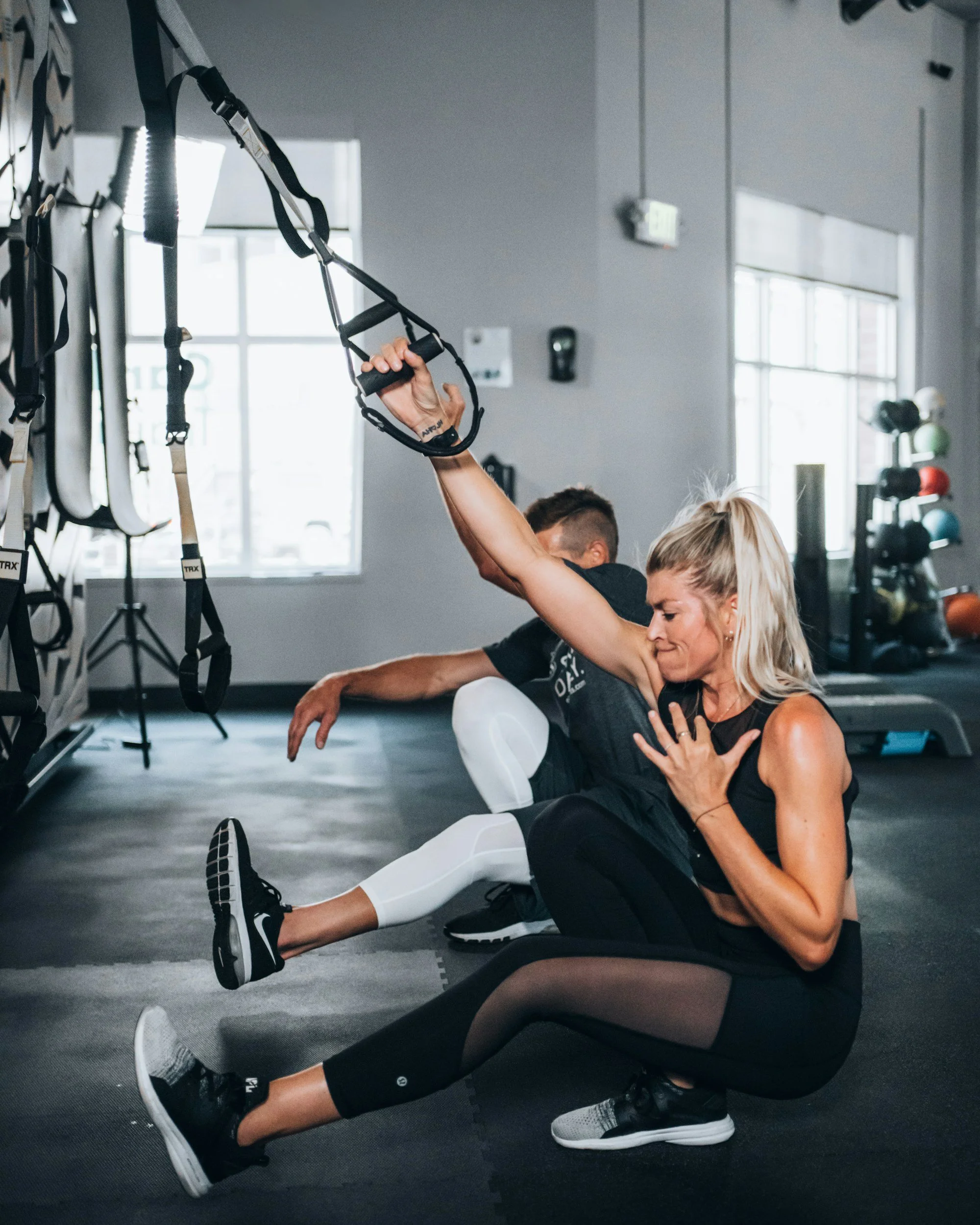
4. It Can Build More Strength Per Limb Than You'd Expect
There's a well-documented phenomenon in strength science called the bilateral deficit, where the combined force your two limbs can produce independently is often greater than the force they produce when working together at the same time. Because of this, some researchers argue unilateral training allows certain muscles to be loaded more effectively than bilateral lifts alone.
A study on unilateral versus bilateral resistance training in trained men found that six weeks of unilateral-only training produced significantly greater improvements in unilateral strength compared to a control group, with results comparable to bilateral training for bilateral strength outcomes. You can read the study here. Similarly, a comparison of Bulgarian split squats to the traditional back squat found comparable quad and glute activation between the two at matched relative loads, with the added advantage that the split squat exposes left-right differences that a bilateral squat simply cannot.
More detail is available in this biomechanics comparison study.
5. It Builds Real-World and Sporting Function
Very little of daily life or sport happens with both feet planted symmetrically on the floor. Walking, running, climbing stairs, changing direction, kicking, and throwing are all fundamentally unilateral actions. Training exclusively with bilateral lifts builds strength that doesn't always transfer cleanly to how your body actually moves outside the gym.
Unilateral exercises close this gap by training the stabilisation patterns your body relies on during single-leg stance phases of gait and sport-specific movement, which is why they're a staple in both athletic performance programmes and rehabilitation settings following injuries such as ACL reconstruction.
Examples of Unilateral Exercises to Add to Your Programme
Lower body:
Bulgarian split squat
Walking lunges and reverse lunges
Single-leg Romanian deadlift (RDL)
Single-leg press
Step-ups
Single-leg glute bridge
Pistol squat (progression)
Lateral lunge
Upper body:
Landmine press
Single-arm dumbbell row
Single-arm shoulder press
Single-arm chest press (dumbbell or cable)
Single-arm farmer's carry
Single-arm lat pulldown
Core and full-body:
Single-arm/single-leg deadlift combinations
Renegade rows
Half-kneeling landmine press
Single-leg cable chop
The AdMac Fitness Approach
At AdMac Fitness, we don't just chase the biggest numbers on a bilateral lift. We look at how you actually move, where your imbalances lie, and what your body needs to stay strong and injury-free for the long term. Unilateral training is a cornerstone of that approach across our Bow and South Woodford studios, whether you're returning from injury, chasing a performance goal, or simply want to move and feel better day to day.

Want to improve your health and fitness? Let the AdMac Fitness Personal Trainers help…
AdMac Fitness has been helping the people of East London transform their health and fitness for nearly a decade.
We help people using tried and tested fitness approaches. Our expert team of personal trainers, based in both Bow and South Woodford, can help you get a grip on your health forever. With our guidance and experience, you can relax knowing that your fitness journey is going to be guided by some of the best personal trainers in East London.
For more information on who we are, what we do and how we can help you achieve your health and fitness goals, contact us on… 07921465108 or email us at admacfitness@gmail.com. We look forward to hearing from you!
Our locations are…
AdMac Fitness: Arch 457 Robeson St, London E3 4JA
AdMac Fitness South Woodford: Unit 4 Marlborough Business Centre, 96 George Lane, South Woodford, London, E18 1AD